1914
Kiss of the Spider Woman1914 is both an inscription on a windowpane and the year that fixes the spinster’s personal loss to the outbreak of war. In the tale she confides to the maid, the date joins a house prepared for a wedding to a departure that becomes permanent; its later return in the story of another engaged couple makes the year a hinge between private grief and history’s repetition.
The Date on the Window
At the forest house, a young man and his fiancée plan to rent the property after their wedding. He wants to carve their names into a thick windowpane with the stone from her engagement ring, beside an older inscription bearing a couple’s names and the date 1914. As he tries to cut his fiancée’s name, the stone slips from its setting and falls to the floor. The couple say nothing, but the moment carries an unspoken fear of a bad omen. They leave soon afterward, promising to return.
The older inscription turns out to belong to the spinster and the fiancé she had once expected to marry. By attaching 1914 to the window, the narrative makes the house a keeper of two engagements: one marked in the past, the other still awaiting its promised return.
War and Personal Loss
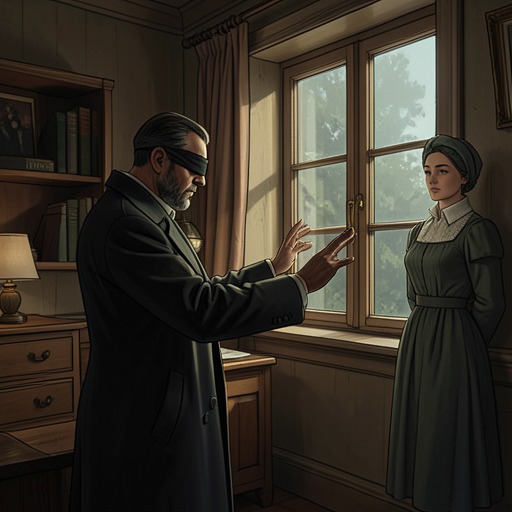
The spinster tells the maid that her fiancé died at the front after the war broke out in 1914. She had prepared for their life together in the stone house in the forest, making the trousseau and embroidering its tablecloths, sheets, and curtains herself. The work preserved her affection in objects meant for a shared home, but the wedding never took place. Almost thirty years later, she still misses him as intensely as on the afternoon he departed.
The year therefore marks more than a death. It begins a prolonged separation in which the house, its furnishings, and the inscription remain after the future they were meant to serve has vanished. The spinster’s account gives the old date an intimate scale: a historical outbreak of war is remembered through one departure, one lost fiancé, and a home left prepared for someone who never returned.
Repetition and Interrupted Futures
The story’s later turn recalls the spinster’s loss without simply repeating it. After a radio broadcast announces the nation’s entry into the Second World War, the spinster weeps alone in her bedroom. Days later, a letter arrives from the young man who had wanted to rent the house: he has enlisted in the air force and must postpone the wedding, apologizing for failing to keep his word. The couple’s future is suspended, not yet ended, while the spinster’s earlier loss has already become irrevocable.
Set beside that letter, 1914 gives the newer postponement the weight of an echo. The first couple’s interrupted plans revive the spinster’s memory, and the war’s return makes yesterday feel present again. The young maid, left with no tenants and little work, can only look out at the rain; the house once again waits around a future whose arrival is uncertain.